Ovarian reserve testing
Ovarian reserve is an indirect estimate of the capacity of the ovaries to produce enough eggs that could lead to the establishment of a successful pregnancy (either naturally or through fertility treatment). The assessment of ovarian reserve is part of an initial infertility workup. Its precise evaluation through hormonal testing (AMH, FSH, E2) and transvaginal pelvic ultrasound is very important to estimate the chances of success with IVF treatment or estimate the expected egg yield when performing egg freezing treatment. It could be also used to diagnose and monitor conditions like PCOS, low ovarian reserve, perimenopause/menopause, and premature ovarian failure.
Anti-Müllerian hormone (AMH)
Anti-Müllerian hormone (AMH) is a glycoprotein hormone secreted by small preantral follicles in the ovaries. In everyday clinical practice we use AMH measurements very often to evaluate a patient’s ovarian reserve and to predict potential response to ovarian stimulation during IVF treatment. Percentile curves show the age-related decline of AMH and could help in estimating the risk of imminent menopause. Low ovarian reserve patients have AMH values that are usually below 1 ng/mL (or 7,14 pmol/L) or even lower. In contrast patients with a high ovarian reserve or PCOS have very high AMH levels, and their ovarian stimulation must be monitored carefully. AMH levels help to assess the risk of ovarian hyperstimulation syndrome during IVF treatment and establish a treatment plan accordingly.

Figure from Yen & Jaffe’s Reproductive Endocrinology (9th ed., 2024).
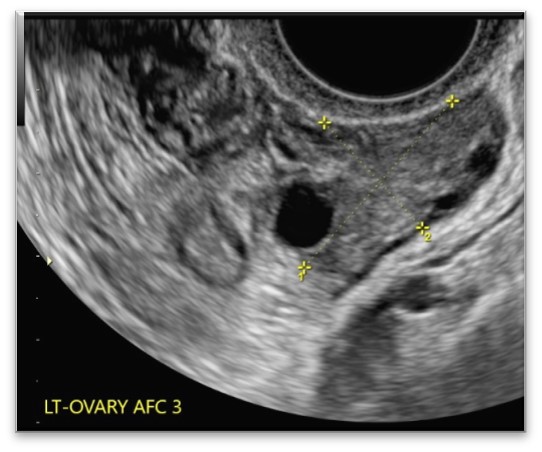
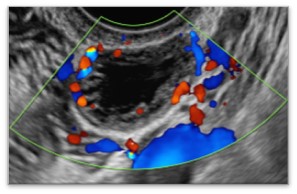
Antral follicle count (AFC) evaluated by pelvic transvaginal ultrasound
Another routinely used method to evaluate a patient’s’ ovarian reserve is to directly visualize the small antral follicles (between 2-9 mm) with the ovarian tissue performing a transvaginal pelvic ultrasound examination. This simple, non-invasive test is used on an everyday basis in our practice and helps to evaluate the number of small follicles that could be stimulated during ovarian stimulation. There is a good correlation between the number of follicles seen (AFC) and the potential (upper) limit of eggs harvested during successful ovarian stimulation. Because this number could fluctuate substantially between menstrual cycles such assessment scans could be performed repeatedly at the beginning of each menstrual cycle (between cycle days 2-5).