Tubal patency testing
The Fallopian tubes or uterine tubes are thin conducts that transport the ovulated egg from the ovaries towards the uterus. This is also the site where fertilization of a human egg occurs naturally. Therefore, the evaluation of tubal permeability is a routine part of infertility workup, especially when natural conception is expected happen such as during timed intercourse or ovulation induction and intrauterine insemination treatment. Depending on world regions almost a third of female infertility could be caused by a tubal factor involving tubal obstruction due to tubal damage and inflammation.
During in-vitro-fertilization treatment where fertilization occurs outside of the body and the uterine tubes are circumvented, their evaluation is not always necessary. However, in some cases even before IVF treatment it is important to check that the tubes are not blocked and so-called hydrosalpinges are not formed which could negatively affect embryo implantation.
Tubal patency testing could be done with the classic X-ray examination (hysterosalpingography or HSG) in a radiology department. Although somewhat cumbersome and operator-dependent, this usually gives an excellent assessment of uterine permeability and could distinguish proximal or distal occlusion, conform or exclude the presence of a hydrosalpinx (a liquid-filled distally blocked tube) or also raise the suspicion of periovarian or pelvic adhesions.
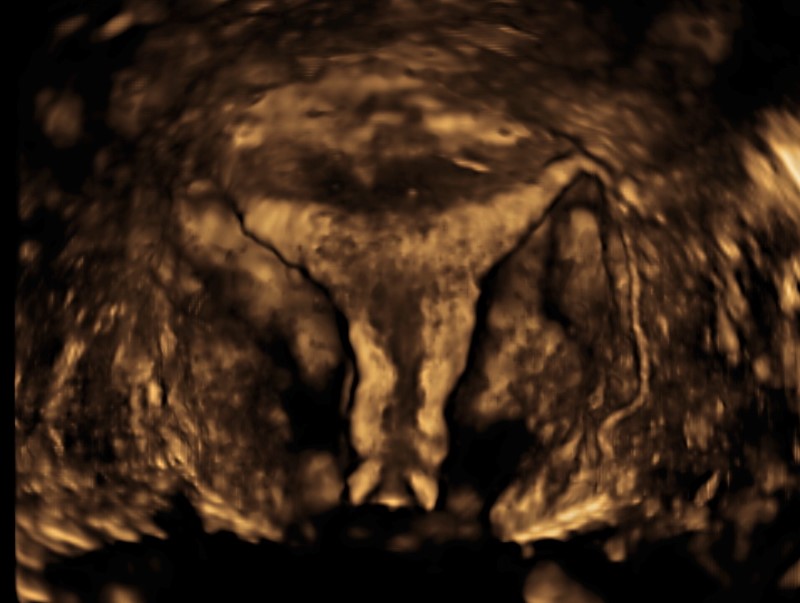
More recently, an easier, less invasive way was developed; the hysterocontrastsonography (HYCOSY) test, when a small amount of echogenic liquid is injected into the womb through a thin catheter and its passage is followed by detailed transvaginal ultrasound examination. It is a less invasive option compared to a classical radiological examination and is a good way to confirm normal tubal patency or raise the suspicion of tubal blockage which, if necessary, could be further investigated by diagnostic laparoscopy. A thorough 3D ultrasound examination also allows the evaluation of the ovarian reserve and the detection of potential concomitant uterine or pelvic abnormalities (such as endometriosis, adenomyosis).