
Egg recipient treatment
Which patients need egg recipient treatment?
Egg recipient treatment is indicated for infertile patients who cannot get pregnant using their own eggs due to premature ovarian failure, natural or surgical menopause or diminished egg quality due to advanced female age, genetic anomalies, or previous failed IVF cycles.
What tests are needed before egg recipient treatment?
Before starting egg recipient treatment an initial consultation is done together with the evaluation of the female patient’s uterine conditions through ultrasound scanning and a partner’s detailed sperm analysis (if applicable). A bloodwork such as blood count, clotting screen, and infectious screening is also requested for partners (if applicable) before starting treatment. Recipient patients with pre-existing health conditions should be evaluated thoroughly to estimate the risks of undergoing egg recipient treatment.
What is the process of egg recipient treatment?
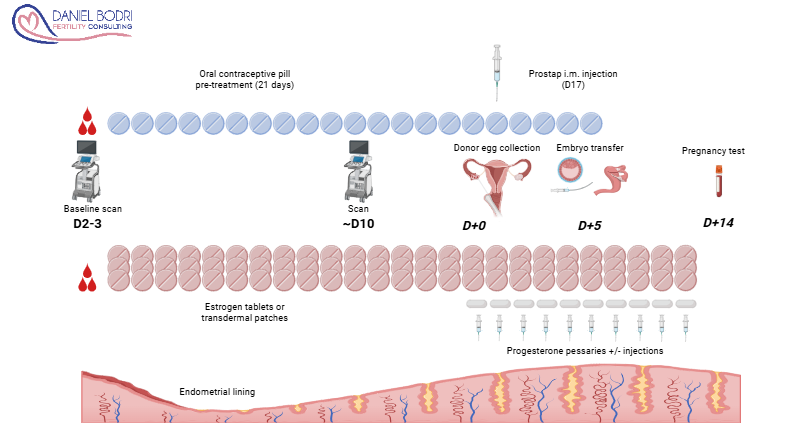
Egg recipient treatment involves the screening of oocyte donor, ovarian stimulation and egg collection. Retrieved eggs are checked by the embryologist in the lab and fertilised with the partner’s and donor sperm. Resulting embryos are cultured through prolonged embryo culture and will be transferred back to the womb of the recipient or frozen for future use. The recipient undergoes endometrial preparation using different protocols, such as artificial cycle or modified natural cycle protocol. This starts from the onset of the menstrual period and last approximately 3 or 6-7 weeks until the scheduled day of frozen-thawed embryo transfer procedure. A pregnancy test 10-14 days after embryo transfer will confirm whether the embryo has implanted.
What are the side-effects and risks of egg recipient treatment?
For the recipient patient the treatment is relatively simple and involves only the endometrial preparation through the administration of exogenous hormones or in a natural cycle. Embryo transfer is a very simple ultrasound-guided procedure without any anaesthesia. If the embryo has implanted potential pregnancy complications include extrauterine pregnancy, early and late pregnancy loss, preeclampsia, pregnancy-induced hypertension, premature delivery and others.
Are there any risks for the offspring following egg recipient treatment?
Children born from an egg recipient treatment are generally healthy and could have a lower risk of developing congenital anomalies due to the young age of egg donors (between 18-35 years) and the thorough screening that they underwent.
What is the success rate of egg recipient treatment?
Egg recipient treatment has the highest success rate among assisted reproductive treatment options, reaching as high as 65-60% per each embryo transfer. Subsequent live birth rates are slightly lower at around 50-55%. The success rates are influenced by embryo quality and factors related to the recipient patients such as uterine environment, obesity.
Is there any difference between using fresh or frozen donor eggs?
Donor eggs are nowadays a routinely cryopreserved using vitrification and could be stored in donor egg banks. The advantage of using frozen donor eggs is that they are readily available for treatment, whereas the drawback is that some eggs might not survive the thawing process. Once successfully thawed, success rates of frozen eggs are very similar to fresh ones.